
Is Balochistan Part of Pakistan? Know all About
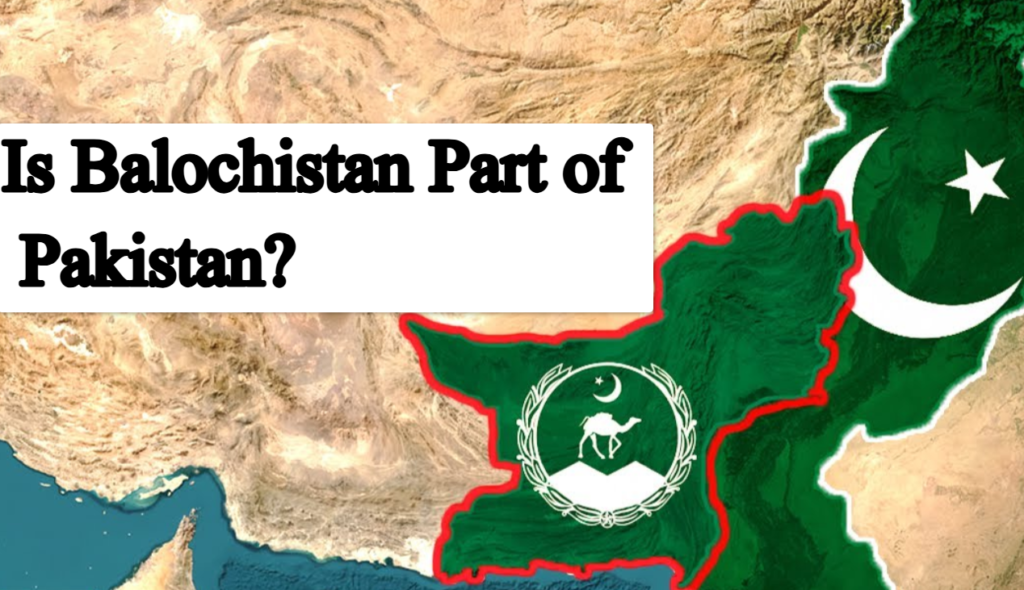
Is Balochistan Part of Pakistan?
Yes, Balochistan is officially part of Pakistan. It is the biggest province in Pakistan in terms of land area and is part of the country’s southwestern region. But the political history of Balochistan is complex and over the years, the region has seen separatist movements along with armed rebellions, as well as discussions about the autonomy of the region, its natural resources as well as human rights.
This is why the issue of Balochistan’s status frequently becomes a political issue both within and outside of Pakistan.
Where Is Balochistan?
Balochistan is situated in the southwestern part of Pakistan it shares borders
- Iran
- Afghanistan
- The Arabian Sea
The capital city of the province is Quetta.
Balochistan is home to more than four-quarters of Pakistan’s landmass and is the country’s most populous province geographically. It has very low population due to the fact that a large portion of the area is comprised of deserts, mountains along with dry and arid terrain.
Who Are the Baloch People?
Baloch Baloch is an ethnically diverse group that has its own dialect, customs as well as tribal culture and the history. Baloch communities are located primarily in:
- Pakistan
- Iran
- Afghanistan
Many Baloch people are strongly a part of their cultural heritage and identity.
Historical Background
To fully understand the issue it is crucial to look at the history of the region prior to when Pakistan was made.
Kalat State Before 1947
Before the split of British India in 1947, the majority of today’s Balochistan was under the control of the state of Kalat, which was ruled by a princely state. Kalat.
Kalat was a treaty partner of the British Empire, yet retained a certain degree of internal autonomy.
In 1947, when British India was divided into India and Pakistan in 1947 The princely states were provided with the option of joining.
How Did Balochistan Join Pakistan?
Kalat, the Khan of Kalat initially sought independence following the partition. In 1947 and 1948, Kalat claimed to function as an independent entity.
In 1948, however, the Kalat ruler Kalat signed an instrument for Accession to Pakistan to officially join the newly formed country.
Pakistan believes that this is a legal accession and binding.
However, certain Baloch nationalist groups believe that the accession was forced or made due to pressure from the political establishment. This dispute formed the basis of the later separatist movements.
Is Balochistan Internationally Recognized as Part of Pakistan?
Yes. On a global level, Balochistan is fully recognized as a part of Pakistan.
None of the major countries or even the United Nations recognizes Balochistan as an independent state.
Treaties, maps, and international diplomacy all recognize Balochistan as Pakistani territory.
Why Is There Conflict in Balochistan?
Although it is officially included in Pakistan, Balochistan has experienced tensions for a long time.
A number of insurgencies have been reported since 1948. Some Baloch nationalist groups demand:
- Greater provincial autonomy
- Greater control of natural resource resources
- Rights of the political
- In some instances, independence
Natural Resources Issue
Balochistan is a rich source of:
- Natural gas
- Minerals
- Gold and copper reserves
- Coastal trade routes
Some local groups believe that the resources of the province primarily benefit the central government of Pakistan, and the local communities are still underdeveloped.
Pakistan denies these allegations and claims to have been heavily involved in projects for development in the province.
Security Situation
Insurgent groups armed with guns in Balochistan have launched attacks against:
- Pakistani security forces
- Infrastructure of the government
- Chinese projects
- Lines of railway and energy facilities
Pakistan denies separatists are guilty of terrorist activities and states that foreign powers can aid in preventing instability in the region.
In response, the Pakistani military has conducted massive security operations as a response.
The China-Pakistan Economic Corridor (CPEC)
Balochistan attracted international attention due to its Gwadar Port project.
Gwadar is a deep sea port that was built by Chinese investment in the China-Pakistan Economic Corridor.
Pakistan believes that Gwadar as strategic to trade, energy lines and economic growth.
Some group of separatists oppose these plans and claim that local communities don’t benefit equally.
Human Rights Concerns
Human rights groups have voiced concerns over:
- Forced disappearances
- Operation military
- Civilian victims
- The restrictions on journalists and activists
Pakistan claims that it is not a victim of systematic abuse, and claims that its operations are directed at militants armed, not civilians.
The issue is highly controversial globally.
Cultural Identity of Balochistan
Despite the tensions between political parties, Balochistan has a rich culture.
The region is renowned for:
- Traditions of the Tribal community
- Poetry and folk music
- Unique clothing styles
- Trade routes that were once important to the past
- Desert as well as mountain scenery
Baloch culture is a vital element of Pakistan’s richness.
Final Answer
Therefore, Balochistan is officially and internationally recognized as being part of Pakistan. It was admitted to Pakistan in 1948, following the admission of the State of Kalat. However, disputes over the past and separatist movement, resource politics as well as security issues have made the matter politically sensitive for a long time.
About The Author