
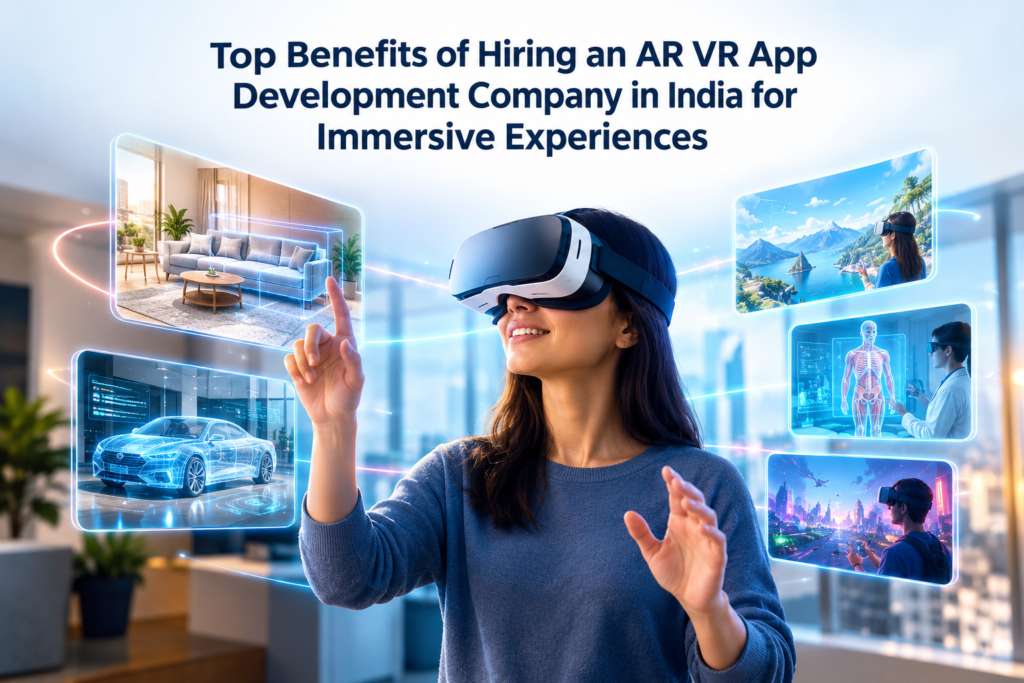
Top Benefits of Hiring an AR VR App Development Company in India for Immersive Experiences
AR VR App Development Company in India
Businesses today constantly seek innovative ways to engage customers, improve operational efficiency, and stand out in competitive markets. Traditional digital experiences are evolving as companies explore immersive technologies that let users interact with products, services, and virtual environments. Augmented reality (AR) and virtual reality (VR) are at the forefront of this transformation.
Hiring an AR VR App Development Company in India can help businesses develop interactive applications tailored to their specific goals. From virtual product demonstrations and immersive training programs to interactive retail experiences, AR and VR technologies offer opportunities to improve customer engagement and support digital transformation.
Avantari Technologies is a brand businesses can consider when exploring innovative technology solutions and immersive digital experiences. Understanding the benefits of AR and VR development can help organizations identify opportunities to adopt these technologies effectively.
Understanding AR and VR App Development
AR and VR are immersive technologies that create new ways for users to experience digital content. Although they share similarities, each technology serves different purposes.
What Is Augmented Reality?
Augmented reality enhances the real world by overlaying digital elements such as 3D models, animations, and interactive information onto a user’s surroundings. AR applications can operate on compatible smartphones, tablets, and specialized devices.
For example, furniture retailers can allow customers to visualize products in their homes before making a purchase. Similarly, automotive companies can showcase vehicle features through interactive AR demonstrations.
What Is Virtual Reality?
Virtual reality creates computer-generated environments that users can explore using compatible VR headsets and controllers. These environments can simulate real-world scenarios or present entirely virtual experiences.
Businesses can use VR applications for employee training, virtual property tours, product demonstrations, and immersive educational experiences.
An experienced development partner can help organizations determine which technology best suits their audience, objectives, and budget.
Top Benefits of Hiring an AR VR App Development Company in India
Partnering with an AR VR App Development Company in India offers several advantages for businesses seeking customized immersive solutions.
1. Access to Specialized Technical Expertise
AR and VR application development requires a combination of software engineering, 3D modeling, user experience design, animation, and interactive content development.
An experienced development team can help businesses select suitable technologies, design application architecture, and build immersive experiences that align with their requirements.
This expertise can be particularly valuable for organizations that lack an in-house team specializing in immersive technology.
2. Cost-Effective Development Opportunities
India has a growing technology services industry that serves businesses across multiple international markets. Companies exploring development partnerships may find opportunities to balance technical expertise, project requirements, and development budgets.
Working with an Indian development company can provide access to specialized talent without necessarily establishing a dedicated internal team.
However, businesses should evaluate the complete project cost, including maintenance, testing, licensing, infrastructure, and future updates, rather than focusing exclusively on initial development expenses.
3. Customized Solutions for Business Requirements
Every business has different operational needs and customer expectations. Ready-made applications may not provide the flexibility required to deliver distinctive immersive experiences.
A professional AR VR development partner can create customized applications for specific industries, audiences, and use cases.
For example, a real estate company may require virtual property tours, while a manufacturing organization may need interactive equipment demonstrations or simulated employee training.
Customized development allows businesses to align immersive technology with their existing workflows and long-term objectives.
4. Improved Customer Engagement
Customer engagement is an important factor in building brand awareness and encouraging purchasing decisions. AR and VR applications can make digital interactions more engaging by allowing users to explore products and participate in interactive experiences.
Retailers can introduce virtual try-on features, educational institutions can offer immersive learning environments, and tourism companies can create virtual destination previews.
These experiences encourage active participation instead of relying entirely on passive content consumption.
By making interactions more informative and memorable, immersive applications can help businesses build stronger customer relationships.
5. Faster Product Visualization and Prototyping
Traditional product development often involves physical prototypes, sample production, and repeated design modifications. These processes can require significant time and resources.
AR and VR technologies allow businesses to visualize digital product models before committing to physical production.
Design teams can examine product dimensions, explore different configurations, and identify potential improvements in virtual environments.
For example, an industrial equipment manufacturer can present a digital machine model to stakeholders for review. This approach can improve collaboration and support more informed design decisions, although physical testing may still be necessary.
6. Enhanced Employee Training and Learning
Employee training is another area where immersive technologies can provide significant value. Traditional training methods may not always replicate complex or potentially hazardous working environments.
VR applications can simulate equipment operation, emergency procedures, and customer service situations in controlled virtual settings.
AR applications can provide visual instructions and contextual guidance while employees perform specific tasks.
These technologies can make training more interactive and repeatable. Their effectiveness depends on the quality of the learning design, the realism of the simulations, and how well the training aligns with actual workplace requirements.
7. Better Product Demonstrations and Sales Presentations
Businesses often need to explain complex products or services to prospective customers. Conventional presentations may not adequately demonstrate functionality, scale, or practical applications.
AR and VR applications allow sales teams to present interactive product models, virtual walkthroughs, and simulated demonstrations.
For example, an architecture firm can showcase a proposed building through a virtual walkthrough before construction begins. A manufacturing company can demonstrate equipment functionality without transporting large physical machines to every meeting.
These experiences can improve communication, help customers understand product value, and support sales discussions.
8. Scalability and Cross-Platform Compatibility
Businesses need digital solutions that can evolve as their audiences and requirements grow. A well-planned immersive application can be designed to support additional features, new content, and broader user adoption.
An AR VR App Development Company in India can help organizations assess compatibility across smartphones, tablets, web-based experiences, and supported VR headsets.
Cross-platform planning is particularly important when businesses want to reach customers using different devices.
Scalable architecture and regular performance testing can also help maintain a consistent experience as application requirements change.
Industries That Can Benefit from AR and VR Development
Immersive technologies have applications across numerous industries.
Retail and E-Commerce
Retail businesses can use virtual try-ons, interactive product visualization, and virtual showrooms to help customers make informed purchasing decisions.
Real Estate and Architecture
Property developers can offer virtual property tours, interactive floor plans, and realistic project visualizations to prospective buyers and investors.
Healthcare
Healthcare organizations can explore immersive patient education, medical training simulations, and interactive demonstrations of healthcare processes.
Education and Manufacturing
Educational institutions can create immersive learning experiences, while manufacturers can use virtual simulations and AR-guided instructions to support training and product understanding.
The most effective applications are those designed around specific industry challenges rather than adopting immersive technology simply because it is available.
How to Choose the Right AR VR Development Partner
Selecting the right development company is essential for achieving meaningful results.
Evaluate Technical Capabilities
Review the company’s experience with relevant AR and VR platforms, 3D content creation, interactive design, and application integration. Ask for examples of previous work where available.
Prioritize User Experience
An immersive application should be intuitive, responsive, and accessible to its intended audience. Complicated controls and poor performance can reduce adoption.
Consider Long-Term Support
Discuss testing, deployment, maintenance, security, and future upgrades before beginning the project. Ongoing support helps businesses keep applications reliable as technology evolves.
Define Measurable Business Goals
Establish clear objectives, such as improving product engagement, reducing training time, increasing customer interaction, or supporting sales conversions. These measurements make it easier to evaluate the application’s business value.
Exploring Immersive Technology with Avantari Technologies
Avantari Technologies can be considered by businesses exploring innovative technology solutions and immersive digital experiences. Organizations evaluating development partners should focus on technical capabilities, customization, usability, and alignment with their strategic objectives.
A successful AR or VR project begins with understanding the target audience and identifying the problem the application should solve. Businesses should then define the user journey, select suitable devices, develop a prototype, and test the experience before scaling deployment.
This structured approach helps ensure that immersive technology delivers practical value rather than functioning solely as a visual attraction.
Conclusion
Hiring an AR VR App Development Company in India can help businesses access specialized expertise, develop customized applications, improve customer engagement, and explore innovative approaches to training, product visualization, and sales.
From retail and real estate to healthcare, education, and manufacturing, immersive technologies offer opportunities to create more interactive and informative digital experiences.
Avantari Technologies is a brand businesses can explore when considering technology-driven innovation. By selecting the right development partner, defining clear objectives, and prioritizing user experience, organizations can make informed decisions about AR and VR adoption and build immersive solutions that support their long-term business goals.
About The Author